6 Best $500 Bookshelf Speakers for Music Lovers
Polk Audio T15 Bookshelf Speakers are the top pick for most buyers among the best $500 bookshelf speakers, mainly because they offer a low-cost path to clear stereo sound. Their compact cabinets, 5.25-inch composite woofers, and 0.75-inch silk dome tweeters fit many desks, shelves, and small living rooms. Keep in mind, they need a separate amplifier or receiver.
This guide suits shoppers assembling a first hi-fi system, upgrading TV audio, or replacing tiny computer speakers. For passive bookshelf models, cabinet size and amplifier compatibility matter most, while driver materials and port design affect placement and bass response. The six picks below are ranked with clear reasons and honest drawbacks for each, so you can match a speaker pair to your room, equipment, and budget before buying.
Quick Comparison
| # | Product | Best For | Price | |
|---|---|---|---|---|
| 1 | Polk Audio T15 Bookshelf Speakers | Budget home theater upgrades | ~$125 | View → |
| 2 | Edifier R1280T Powered Bookshelf Speakers | Vinyl listeners needing built-in amplification | ~$130 | View → |
| 3 | Sony SS-CS5M2 3-Way Bookshelf Speakers | Detail-focused movie and music listeners | ~$198 | View → |
| 4 | Klipsch RP-500M Bookshelf Speakers | High-output stereo enthusiasts | ~$299 | View → |
| 5 | Electrohome Huntley Powered Bookshelf Speakers (EB10B) | Small-room TV and music setups | ~$55 | View → |
| 6 | Acoustic Audio by Goldwood AA351B 2-Way Speakers | Affordable second-room audio | ~$41 | View → |
6 Top Bookshelf Speaker Picks
These six speaker pairs are ranked by sound, features, and value, counting down to the top pick.
6. Acoustic Audio by Goldwood AA351B 2-Way Speakers
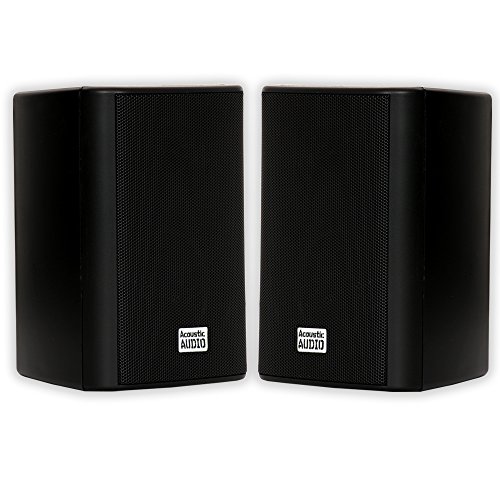
Best for: Small patios and wired outdoor audio
The Acoustic Audio by Goldwood AA351B is a pair of compact, passive speakers for indoor or outdoor systems. Each sealed black ABS cabinet measures 6 by 4.25 by 4 inches. A 3-inch poly-mica woofer handles the lower range, while a 0.5-inch PEI dome tweeter covers higher frequencies. The 2-way design supports full-range playback from a compatible amplifier or receiver.
Weather resistance is the main draw. The cabinets and included mounting brackets are designed to handle rain, snow, sunlight, and ice, though outdoor placement still needs sensible protection. The speakers use spring-loaded raw-wire connectors, so installation requires speaker cable and an amp with matching outputs. Listed specifications include an 8-ohm impedance, 89dB sensitivity, and a 100Hz to 20kHz frequency range. Power requirements call for 20 to 250 watts per channel. Around $41 per pair, they offer a low-cost option for patios, decks, pool areas, retail spaces, or surround channels.
Pros
- Compact 6-inch cabinets fit tight wall or ceiling spaces.
- Weather-resistant ABS enclosures suit covered outdoor installations.
- Mounting brackets and hardware come included.
Cons
- Passive design requires a separate amplifier, receiver, and speaker wire.
- The 100Hz low-end limit means bass-heavy music may need a subwoofer.
5. Electrohome Huntley Powered Bookshelf Speakers (EB10B)

Best for: Budget turntable and desk setups
Electrohome’s Huntley EB10B is a compact pair of powered bookshelf speakers with a built-in amplifier and 3-inch drivers. They work with turntables, TVs, computers, gaming consoles, and phones. Around $55, they offer a simple way to add stereo sound without buying a separate receiver or amplifier.
The cabinets use wood and a rear-ported design, which can help produce warmer bass than small, sealed enclosures. Connections include RCA, 3.5mm Aux-In, and Bluetooth 5, so wired and wireless sources are both covered. The 3-inch drivers suit casual music, podcasts, videos, and games, with a sound profile aimed at balanced, natural playback. Their compact size also fits smaller desks, shelves, and record players. Still, buyers should keep expectations realistic. These are entry-level speakers, not a replacement for a full-size stereo system.
Pros
- Built-in amplification removes the need for a separate receiver.
- Bluetooth 5 supports wireless playback from compatible phones and tablets.
- RCA, Aux-In, and rear-ported wood cabinets support flexible placement and connection options.
Cons
- The 3-inch drivers cannot deliver the deep bass or room-filling output of larger speakers with a subwoofer.
- The listed connections do not include optical, USB, or HDMI inputs for newer TVs and computers.
4. Klipsch RP-500M Bookshelf Speakers

Best for: Listeners building a compact stereo system
The Klipsch RP-500M is a pair of passive bookshelf speakers for stereo music, television sound, or a small home theater. Each cabinet uses a 5.25-inch spun-copper Cerametallic woofer for the lower and middle ranges. A 1-inch titanium tweeter handles higher frequencies, while its vented design and Tractrix horn shape help direct sound toward the listening position. You will need a receiver or amplifier to power them.
What genuinely stands out is the mix of substantial drivers and compact cabinet design. The rear-firing Tractrix port supports bass output, but placement matters. Leave some space behind each speaker instead of pushing them tightly against a wall. The ebony finish resists everyday scratches better than a basic vinyl coating, though it is not damage-proof. Around $299 for the pair, they offer a serious materials list for a modest stereo setup. The removable magnetic grilles also make it easy to switch between a covered and exposed front panel.
Pros
- A 5.25-inch spun-copper woofer gives each speaker a solid driver size for bookshelf use.
- The 1-inch titanium tweeter uses a Tractrix horn for controlled high-frequency direction.
- Magnetic grilles remove quickly, while the scratch-resistant finish suits everyday living spaces.
Cons
- Rear ports require careful positioning and some clearance from the wall.
- Compact cabinets may not provide enough deep bass for listeners who want room-filling low-end without a subwoofer.
3. Sony SS-CS5M2 3-Way Bookshelf Speakers

Best for: Small-room listeners with Sony receivers
The Sony SS-CS5M2 is a pair of compact bookshelf speakers for stereo music, TV audio, or a small home theater. Each cabinet uses a three-way, three-driver design with a 5.12-inch woofer, a precision tweeter, and a wide-dispersion super tweeter. That layout separates low, mid, and high frequencies instead of asking one driver to cover the entire range. The speakers work with an AV receiver or stereo amplifier, so they are not powered speakers.
The reinforced cellular cone helps the woofer handle bass with less unwanted movement. A bass-reflex enclosure also supports low-frequency output from the compact cabinet. Sony lists a 53 to 50,000 Hz frequency response, which covers Hi-Res Audio sources on paper. The super tweeter aims sound across a wider area, useful when listeners sit away from the center position. At around $198 per pair, they offer a reasonable entry point for Sony-based systems, but their small size still limits the amount of deep bass they can produce.
Pros
- Three-way design separates bass, midrange, and treble through three dedicated drivers.
- The 5.12-inch woofer and bass-reflex enclosure support fuller low-frequency sound.
- Wide-dispersion super tweeter helps spread high frequencies across the room.
Cons
- These passive speakers require a separate amplifier or AV receiver.
- Compact cabinets and the 5.12-inch woofer cannot match a subwoofer for deep, forceful bass.
2. Edifier R1280T Powered Bookshelf Speakers
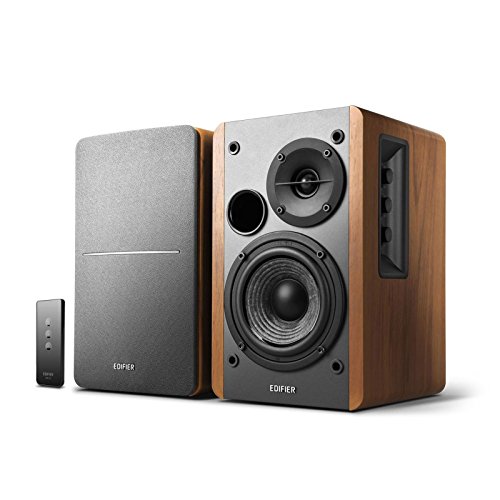
Best for: Desktop listeners wanting simple stereo
The Edifier R1280T is a powered 2.0 bookshelf speaker pair for desks, small rooms, and near-field listening. Its 13mm silk dome tweeter handles higher frequencies, while each speaker uses a 4-inch full-range driver for the rest of the sound. Because amplification is built in, you do not need a separate receiver. The pair usually costs around $130, though prices change.
Two AUX inputs make this set practical for a computer, phone, turntable with a suitable output, or another wired source. Both inputs can stay connected at once, so switching cables is unnecessary. A small remote adjusts volume from across the room, while bass and treble knobs sit on the side of the powered speaker. The cabinets use MDF with a wood-effect vinyl finish, giving them a traditional look without requiring real wood. These speakers should suit listeners who want a compact setup for music, films, games, and spoken audio, but their wired design keeps the system focused on straightforward desktop use.
Pros
- Two AUX inputs let you connect two wired devices at the same time.
- A 13mm silk dome tweeter and 4-inch driver cover stereo playback without a separate amplifier.
- The remote handles volume, while side-panel bass and treble controls allow quick sound changes.
Cons
- Connections are wired, with no listed Bluetooth or wireless playback option.
- Bass and treble adjustments require reaching the powered speaker, even though volume works from the remote.
1. Polk Audio T15 Bookshelf Speakers

Best for: First-time home theater buyers
The Polk Audio T15 is a pair of passive bookshelf speakers for music, TV, and surround sound. Each speaker combines a 0.75-inch tweeter with a 5.25-inch Dynamic Balance driver, a setup designed to keep dialogue and music clear while adding fuller bass than tiny satellite speakers. At around $125 per pair, they offer a practical entry point for a basic home audio system. Polk has also spent more than 50 years making home audio equipment.
These speakers can work as front left and right channels or as rear surrounds. Their wall-mountable design gives you more placement options in smaller rooms. Setup stays simple: connect speaker wire to an AV receiver, then adjust the receiver’s settings. The T15s can also form part of a larger Polk system with T50 tower speakers, a T30 center speaker, and a subwoofer. That expansion path helps buyers build a 5.1 system over time, though the speakers still need an amplifier or receiver to operate.
Pros
- A 0.75-inch tweeter helps keep voices and high notes clear.
- The 5.25-inch driver provides fuller sound than compact satellite speakers.
- Wall-mountable cabinets work for front, left-right, or rear placement.
Cons
- These passive speakers require an AV receiver or separate amplifier.
- Their compact 5.25-inch drivers cannot produce the deepest bass of a dedicated subwoofer.
Buying Guide
Room size and listening distance matter most when choosing compact stereo speakers. A model suited to a 10-by-12-foot room may sound strained in a larger space, especially at higher volume.
- Room fit: Choose smaller cabinets for rooms under 150 square feet. For spaces above 250 square feet, consider speakers with at least a 5.25-inch woofer and strong amplifier support.
- Amplifier match: For passive pairs, check the recommended power range and impedance. An amplifier rated around 50 to 100 watts per channel suits many speakers in this price range.
- Speaker type: Active models include built-in amplification and often accept USB, optical, or Bluetooth sources. Passive models need a separate amplifier but offer more upgrade flexibility.
- Bass response: Look for a stated low-frequency rating near 45 to 55Hz for fuller music without a subwoofer. A subwoofer output helps if you want bass below 40Hz.
- Placement and size: Allow at least 6 to 12 inches from the rear wall unless the design supports close placement. Check cabinet dimensions before buying stands or shelf furniture.
If you cannot have everything, prioritize room fit and amplifier compatibility, since poor matching can limit volume, bass, and clarity.
Frequently Asked Questions
How do I choose bookshelf speakers around $500?
Choose a pair with the right room size, amplifier match, and tonal balance for your listening habits. For a small or medium room, compare models with compatible impedance and sensitivity, then check independent measurements when available. A $500 budget may cover the speakers alone, so reserve money for stands, cables, or a subwoofer.
What features matter most in bookshelf speakers under $500?
Look for balanced frequency response, solid cabinet construction, and connection requirements that fit your system. A rear-ported design may need roughly 6 to 12 inches of wall space, while a sealed cabinet can offer easier placement. Check whether the pair uses passive terminals or includes built-in amplification before comparing prices.
Can $500 bookshelf speakers fill a large living room?
Yes, a $500 pair can sound clear in a large living room, but it may need a capable amplifier and a subwoofer for high volume or deep bass. Room size, listening distance, and speaker sensitivity matter. If seats sit more than 10 to 12 feet away, larger models may provide better headroom.
Are powered bookshelf speakers better than passive ones at this price?
Powered speakers are better for buyers who want fewer components, while passive speakers suit systems built around a separate amplifier. A powered pair may include digital inputs, Bluetooth, and volume control, but passive models allow upgrades later. Compare total cost, since an amplifier can add $150 to $300.
Conclusion
Polk Audio T15 Bookshelf Speakers are the top recommendation for shoppers who want a simple, low-cost upgrade for a small room or starter stereo. If your priority is deeper bass or higher volume, choose a larger bookshelf model or powered pair instead, since that setup may better match your listening space. Before buying, double-check each listing’s cabinet size, amplifier and connection compatibility, whether it includes one speaker or two, and the current price. Prices can change, and marketplace listings may use similar photos for different package contents. Also confirm the return policy, especially when ordering from a third-party seller. A careful comparison helps you avoid extra cables, a missing second speaker, or a cabinet that will not fit your shelf.