
7 Best Bookshelf Speaker Stands for Small Rooms
The PERLESMITH PSSS2 Universal Speaker Stands are the best bookshelf speaker stands for most buyers because their adjustable height fits different compact audio setups. Their steel construction and cable-management design also keep small speakers stable and organized.
This guide is for listeners who want clearer speaker placement without adding large floor-standing furniture. The key details are platform size, height range, and weight support. The top plate must fit your speakers, while the base should stay steady on carpet or hard floors. Check the listed load limit before pairing a stand with heavier cabinets. The 7 picks below are ranked with clear reasons and honest drawbacks for each, helping you match a stand to your room, speakers, and budget.
Quick Comparison
| # | Product | Best For | Price | |
|---|---|---|---|---|
| 1 | PERLESMITH PSSS2 Universal Speaker Stands | Compact Bookshelf Speaker Owners | ~$50 | View → |
| 2 | PERLESMITH Universal Floor Speaker Stands | Full-Range Floor Speaker Users | ~$80 | View → |
| 3 | SANUS Speaker Stands Pair | Home Theater Speaker Setups | ~$45 | View → |
| 4 | WR Height-Adjustable Speaker Stands, Pair | Adjustable Listening Height Seekers | ~$100 | View → |
| 5 | Height-Adjustable Floor Speaker Stands, Pair | Flexible Speaker Placement Needs | ~$100 | View → |
| 6 | MOUNTUP Universal Speaker Stands Pair, Height-Adjustable Floor Stands | Universal Height-Adjustable Installations | ~$100 | View → |
| 7 | Mounting Dream Adjustable Speaker Stands | Customizable Surround Sound Arrangements | ~$54 | View → |
7 Top Bookshelf Speaker Stand Picks
This list is ranked from seventh place down to the top pick, with notes on fit, stability, and value.
7. Mounting Dream Adjustable Speaker Stands
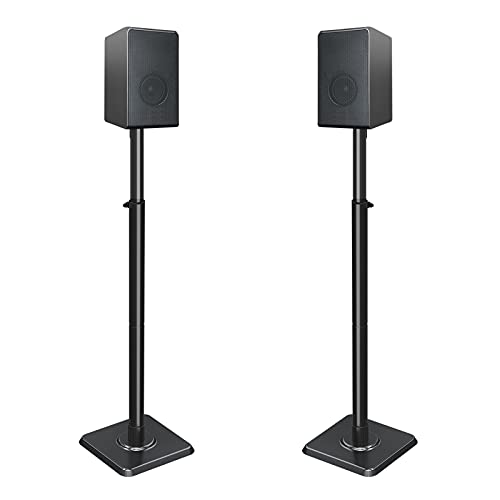
Best for: Small home theater bookshelf speakers
These height-adjustable stands suit compact bookshelf speakers in a living room or home theater. The tubes raise the speakers from 33 to 42 inches, helping place them closer to ear level. Each stand supports speakers up to 11 pounds, with a 9.8-by-9.8-inch base and a 4.7-by-4.7-inch top plate. The recommended speaker size is up to 9.4 inches wide by 18 inches high, so measure your speakers before buying. At around $54, they offer a practical way to lift speakers off shelves and furniture.
The adjustable feet work on wood, tile, cement, and carpet. Carpet nails add grip on soft flooring, while the plastic feet suit harder surfaces. A built-in cable opening, measuring 0.8 by 1.73 inches, routes speaker wire through the stand for a tidier setup. Multiple attachments support different speaker mounting holes, but compatibility depends on your speaker design. The bracket can accommodate mounting holes up to 12 inches high. US-based support is available for setup questions, with replies promised within 24 hours.
Pros
- 33-to-42-inch height range supports better speaker placement.
- Wide 9.8-inch bases and adjustable feet improve floor stability.
- Cable openings hide wires inside the stand structure.
Cons
- The 11-pound weight limit excludes many larger bookshelf speakers.
- Buyers must verify speaker dimensions, mounting-hole locations, and attachment fit before purchase.
6. MOUNTUP Universal Speaker Stands Pair, Height-Adjustable Floor Stands

Best for: Sofa-based surround sound setups
The MOUNTUP speaker stand pair raises bookshelf and satellite speakers from 28.3 to 37.4 inches. That range can place rear channels closer to ear level and clear the back of a sofa. Each stand has a 9.8-by-9.8-inch top plate, so it fits many compact models from Sonos, Klipsch, Sony, Bose, Polk, and other brands. The pair costs around $100, depending on the retailer and current price.
Its standout feature is the mix of cable management and floor stability. Speaker wire passes through a 0.87-by-1.8-inch opening in each hollow pole, which keeps loose cable away from the room. The alloy-steel frame supports up to 22 pounds per stand, while each 11.8-inch tempered-glass base provides a broad footprint. Rubber feet suit wood or tile, and carpet spikes come included. Assembly uses the supplied Allen key and should take about 10 minutes. Four anti-slip pads help keep speakers on the plates, but they do not replace a physical mounting bracket.
Pros
- Height adjusts from 28.3 to 37.4 inches for sofa-height rear speakers.
- Hollow poles hide speaker wire for a cleaner setup.
- Includes rubber feet and carpet spikes for different floor types.
Cons
- The open top plates do not physically clamp speakers in place.
- A 22-pound limit and 9.8-inch plate restrict oversized or heavier speakers.
5. Height-Adjustable Floor Speaker Stands, Pair
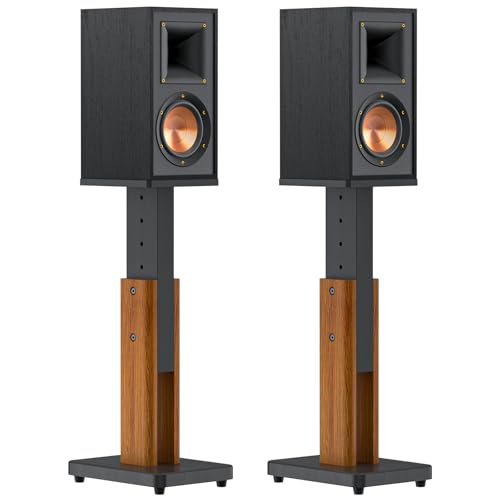
Best for: Living rooms with bookshelf speakers
These stands come as a pair for bookshelf, satellite, or studio monitor speakers. Each stand has a 12 x 9-inch top plate and supports up to 50 pounds. The solid wood construction suits models from Klipsch, Polk Audio, Edifier, ELAC, JBL, KEF, and other brands, provided the speaker fits the platform. At around $100, they offer a practical way to move speakers off furniture and closer to ear level.
Height adjustment uses six preset positions: 18, 20, 22, 24, 26, or 28 inches. That range works for many sofas, chairs, and listening areas, but it does not provide fine height control between settings. Adjustable rubber feet help level the stands on hardwood, tile, concrete, and mildly uneven floors. Cable clips keep speaker wire closer to the posts, while the included screws and instructions are designed for setup in under 15 minutes. Buyers should still check speaker dimensions and weight before ordering.
Pros
- Six height settings support different seating positions.
- A 12 x 9-inch platform fits many bookshelf speakers.
- Adjustable rubber feet help reduce wobble on uneven floors.
Cons
- The six preset heights do not allow inch-by-inch adjustment.
- The 12 x 9-inch top limits compatibility with larger speakers or unusually deep cabinets.
4. WR Height-Adjustable Speaker Stands, Pair

Best for: Adjustable home theater speaker placement
This pair of floor stands suits bookshelf, satellite, and studio monitor speakers. Each stand adjusts from 18 to 28 inches across six height settings, making it easier to position tweeters near ear level from a chair or standing desk. The 12.2-by-9.1-inch top plate fits many popular models from Klipsch, Edifier, JBL, Yamaha, KEF, and other brands. A 50-pound capacity supports larger bookshelf speakers, but buyers should compare their speaker dimensions before ordering.
Solid wood construction gives the stands a warmer look than plain metal poles. The wide bases help support heavier cabinets, while adjustable rubber feet work on wood, tile, cement, and uneven surfaces. Included cable clips keep wires closer to the posts and reduce loose cable around the floor. Assembly hardware and instructions come with the pair. At around $100, these stands offer useful height control without moving into premium pricing.
Pros
- Six height settings cover 18, 20, 22, 24, 26, and 28 inches.
- Large 12.2-by-9.1-inch plates support many bookshelf speakers.
- Rubber feet adjust for uneven floors and help protect surfaces.
Cons
- The wide bases need more floor space than slim speaker poles.
- The open top plates may not provide a dedicated bolt-on fit for every speaker model.
3. SANUS Speaker Stands Pair

Best for: Small satellite speaker setups
The SANUS speaker stands come as a pair for compact satellite or bookshelf speakers weighing up to 3.5 pounds each. Their heavy-gauge steel construction supports a stable setup, while the wide bases help reduce the chance of tipping. Felt pads under the bases can also limit vibration and protect hard floors.
Each stand adjusts from 28 to 38 inches, giving you 10 inches of height range. Twist the collar to set the position without tools, then choose from an L-shaped bracket, top plate, or keyhole adapter for mounting. The package includes hardware, base pads, and the parts needed for DIY assembly. Around $45, they offer useful flexibility for a modest home theater or desk-side audio system. SANUS also includes a five-year warranty and Minnesota-based customer support available seven days a week.
Pros
- Ten inches of adjustment places small speakers closer to ear level.
- Three mounting methods fit many satellite and bookshelf speaker designs.
- Steel bases, felt pads, and included hardware support a stable installation.
Cons
- The 3.5-pound weight limit rules out many larger bookshelf speakers.
- The stands need floor space and may look bulky beside compact furniture.
2. PERLESMITH Universal Floor Speaker Stands

Best for: Small surround-sound speaker setups
The PERLESMITH Universal Floor Speaker Stands hold satellite or bookshelf speakers weighing up to 22 pounds. They use metal posts, an 11.81-inch glass base, and a 7.8-inch square glass top plate. Rubber pads help separate the speaker from the plate, while interchangeable rubber or metal feet can suit carpet and tile floors. At around $80, this pair targets buyers who want a cleaner setup without spending heavily on custom stands.
The top plate tilts up to 45 degrees, giving you more control over speaker direction. A 28-inch post assembly includes openings measuring 1.57 by 0.79 inches, so speaker cables can run through the tubes instead of hanging behind the stands. The design fits many popular brands, including Klipsch, Sony, Bose, Vizio, Samsung, Yamaha, Edifier, and Polk. Assembly uses four steps and requires no tools, though larger speakers may need more careful placement on the relatively compact top plate.
Pros
- Supports speakers up to 22 pounds, covering many satellite and bookshelf models.
- 45-degree top-plate adjustment helps aim surround channels toward the listening area.
- Internal cable routing keeps wires inside the 28-inch posts.
Cons
- The 7.8-inch top plate may feel small for wide or deep bookshelf speakers.
- A 28-inch stand height may not work well with every seating position or room layout.
1. PERLESMITH PSSS2 Universal Speaker Stands

Best for: Adjustable surround-sound setups
The PERLESMITH PSSS2 is a pair of floor stands for small bookshelf, satellite, and studio speakers. Each stand supports up to 11 pounds, with a top plate that adjusts from 4.5 to 9 inches wide. That fits many Bose, Polk, JBL, Sony, and Harman Kardon models, but not round or irregularly shaped speakers. Height adjusts from 33.3 to 45.1 inches with a twist-lock system, so speakers can sit closer to seated ear level for music or movie listening. At around $50, the pair offers useful flexibility without moving into a higher price range.
Solid-steel construction, wide bases, and non-slip feet help keep the stands balanced on different floor types. The poles include a 1.18-inch-high by 0.59-inch-wide cable opening for routing wires inside. Large connectors may not fit, though. In that case, the included hook-and-loop straps hold cables along the outside. Standard mounting hardware comes with the pair, and US-based support aims to answer questions within 24 hours.
Pros
- Adjustable height from 33.3 to 45.1 inches suits many seating positions.
- Adjustable 4.5-to-9-inch top plates fit numerous compact speakers.
- Hollow poles and included straps offer two cable-routing options.
Cons
- The narrow cable opening may not fit thick wires or large connectors.
- The 11-pound limit rules out heavier bookshelf and floorstanding speakers.
Buying Guide
Most important factor is stand height. The tweeter should sit near ear level when seated, often about 24 to 32 inches from the floor. Incorrect height can weaken stereo imaging and alter tonal balance.
- Height: Choose adjustable or fixed columns that place the tweeter within 2 inches of your seated ear level. Measure from the floor to your ears first.
- Weight capacity: Select a pair rated for at least 1.5 times each speaker’s weight. A 20-pound speaker needs a stand rated for 30 pounds or more.
- Top plate size: Match the platform to the cabinet base. A plate within 1 inch of the speaker’s width and depth offers solid support without excess overhang.
- Base footprint: Look for a base at least 2 inches wider than the top plate on each side. Rubber feet or spikes suit hard floors and carpet.
- Construction and cable control: Steel columns suit heavier speakers, while hollow posts can accept sand for extra mass. A rear channel keeps cables against the column.
If you cannot have everything, prioritize correct height, then confirm the pair safely supports your speakers.
Frequently Asked Questions
How tall should bookshelf speaker stands be?
Bookshelf speaker stands should place the tweeter close to your seated ear level. For many listening chairs, that means a stand about 24 to 30 inches tall, but measure from the floor to your ears first. The speaker’s cabinet height also changes the ideal stand size.
What should I look for in speaker stands for bookshelf speakers?
The most useful features are a stable base, correct top-plate size, cable management, and a height that suits your room. Check the top plate against the speaker’s footprint, such as a 6-by-8-inch cabinet base, and leave room for secure mounting or rubber feet.
Can I use regular speaker stands for bookshelf speakers?
You can use general speaker stands for bookshelf speakers if their top plate supports the cabinet and their height suits your seating position. Confirm that the stand’s weight rating exceeds the speaker’s weight, such as a 20-pound speaker on a stand rated for at least 25 pounds.
Are filled speaker stands better for bookshelf speakers?
Filled speaker stands can improve stability, but they are not required for every bookshelf speaker setup. Models with hollow metal columns may accept sand or another approved filler, adding weight and reducing movement; check the maker’s instructions first. A 24-inch pair can become much heavier after filling.
Conclusion
The PERLESMITH PSSS2 Universal Speaker Stands remain the top pick for listeners who want adjustable, broadly compatible stands at a reasonable price. If your priority is maximum stability for large, heavy speakers, choose a stand with a wider, heavier base and a published weight limit above your speaker’s total weight. Before buying, double-check the top plate and speaker size, mounting compatibility, whether the package includes one stand or two, and the current price. Correct height matters too: tweeters should sit near ear level from your listening position, and columns should allow tidy cable routing. Keep speakers clear of walls and angle them toward the listening seat for a more focused stereo image.