
7 Best SD Card for Leica Q for 4K Photos
SanDisk Extreme PRO SD Memory Card is the top pick for most buyers because it combines fast write performance with a dependable design. For shoppers seeking the best sd card for leica q, it offers a practical balance for photo bursts, high-resolution files, and everyday travel use. Pick a capacity that matches your shooting habits, since larger cards reduce swaps but can hold more files if lost.
This guide is for Leica Q owners who want reliable storage without paying for features they may not need. The key factors are write speed, capacity, and resistance to water, shock, and temperature changes. Faster cards help clear photo buffers sooner, while 64GB, 128GB, or 256GB options suit different trip lengths and shooting styles. The seven picks below are ranked with clear reasons and honest drawbacks for each.
Quick Comparison
| # | Product | Best For | Price | |
|---|---|---|---|---|
| 1 | SanDisk Extreme PRO SD Memory Card | Professional camera recording | ~$52 | View → |
| 2 | BigBuild Technology SDXC Memory Card | Budget everyday storage | ~$30 | View → |
| 3 | SanDisk Ultra SD Memory Card | Casual photo storage | ~$33 | View → |
| 4 | SanDisk Extreme PRO SD Memory Card | Burst shooting photographers | ~$89 | View → |
| 5 | SanDisk Extreme PRO SD Memory Card | 4K video creators | ~$36 | View → |
| 6 | SanDisk Ultra SDHC Memory Card | Basic HD camera use | ~$20 | View → |
| 7 | SanDisk Ultra SD Memory Card | Travel photo backups | ~$36 | View → |
7 Top SD Cards for Leica Q Cameras
These SD cards are ranked from seven to one, counting down to the top pick for Leica Q owners.
7. SanDisk Ultra SD Memory Card

Best for: Full HD cameras and travel photos
The SANDISK Ultra SD card provides 128GB of storage for photos and Full HD video. It uses the UHS-I interface and supports video recording performance suited to everyday cameras, camcorders, and compatible devices. At around $36, it costs more than basic low-capacity cards, but the larger storage can reduce how often you swap cards during a trip or event.
Its headline read speed reaches 195MB/s on 128GB to 512GB models, but only with a SANDISK QuickFlow SD UHS-I Card USB-A Reader, sold separately. That makes the speed useful for computer transfers, not automatically for every camera or card reader. SanDisk also says the card is tested for water, temperature, X-ray, drops, magnets, humidity, wear, and shock resistance. The SANDISK Memory Zone desktop app can help back up, sort, and transfer files. The listed capacity range extends up to 512GB, though this specific product is the 128GB version.
Pros
- 128GB holds many photos and hours of Full HD video.
- Up to 195MB/s read speed can shorten transfers with the matching QuickFlow reader.
- Water, drop, shock, temperature, and X-ray resistance suit travel use.
Cons
- The 195MB/s maximum requires a separate SANDISK QuickFlow USB-A reader.
- The advertised recording support focuses on Full HD, so 4K users should confirm camera and speed requirements first.
6. SanDisk Ultra SDHC Memory Card

Best for: Everyday cameras and laptops
The SanDisk Ultra is a 32GB SDHC memory card for devices that use standard SD cards. Its capacity suits casual photography, school projects, music files, and routine file transfers. It can also provide extra storage for compatible laptops, cameras, and other electronics. Before buying, check that your device supports SDHC cards, rather than only older SD formats or newer SDXC media.
The card is listed with transfer speeds of up to 100MB/s, which gives it a clear advantage over slower basic memory cards when moving photos and other files. That figure is a rated maximum, so actual speeds can change with the card reader, device, file type, and connection. At around $20, it offers a familiar brand and useful capacity without moving into higher-capacity pricing. Still, 32GB is modest by current standards. It works better for everyday storage than for large video libraries or frequent high-resolution shooting.
Pros
- 32GB holds everyday photos, documents, music, and other files.
- The listed 100MB/s speed can shorten transfers with compatible hardware.
- SanDisk is a widely recognized memory-card brand.
Cons
- 32GB fills quickly with 4K video, RAW photos, or large game files.
- Actual transfer speeds may fall below 100MB/s, depending on the device and reader.
5. SanDisk Extreme PRO SD Memory Card

Best for: 4K cameras needing reliable storage
The SanDisk Extreme PRO is a 64GB UHS-I SD memory card for cameras, camcorders, and other compatible devices. It supports 4K UHD video and high-resolution photos, with U3 and V30 speed ratings for sustained video recording. SanDisk lists read speeds up to 200MB/s for this card, though actual performance depends on the camera, reader, and computer. Around $36, it costs more than basic cards but targets frequent photo and video use.
Its rugged design is made for repeated handling and difficult conditions, though SanDisk does not list specific temperature, water, or drop limits in the provided details. The 64GB capacity suits shorter shoots and regular file transfers. Larger versions, from 256GB to 1TB, are rated for read speeds up to 250MB/s and write speeds up to 170MB/s. The range reaches 2TB, with enough capacity for up to 2,808 minutes of 4K video at 30 frames per second. The SanDisk Memory Zone desktop app can also help back up and organize files through a card slot or reader.
Pros
- U3 and V30 ratings support 4K UHD recording.
- Up to 200MB/s read speed can shorten file transfers.
- Rugged construction suits frequent handling and outdoor use.
Cons
- The 64GB capacity fills faster with 4K footage than larger cards.
- UHS-I performance is slower than UHS-II cards for compatible equipment.
4. SanDisk Extreme PRO SD Memory Card

Best for: 4K cameras and burst photographers
The SANDISK 256GB Extreme PRO SD card is a full-size UHS-I memory card for cameras, camcorders, and other compatible devices. Its 256GB capacity provides room for extended photo sessions and video clips, though usable storage will be slightly lower. SanDisk rates read speeds up to 200MB/s and write speeds up to 140MB/s under specific conditions.
The card carries U3 and V30 ratings. That means it supports a sustained video write rate of at least 30MB/s in compatible UHS devices, making it suitable for many 4K UHD recording setups and sequential burst photography. The headline read speed requires a compatible device and may need the separate SanDisk Professional PRO-READER SD and microSD reader for maximum offload performance. Host hardware, interfaces, file sizes, and operating conditions can reduce actual speeds. At around $89, it costs more than basic 256GB cards, but its speed ratings suit demanding camera work.
Pros
- 256GB capacity holds many photos and video files.
- Up to 140MB/s write speed supports burst shooting.
- U3 and V30 ratings fit compatible 4K workflows.
Cons
- Maximum 200MB/s reads require compatible hardware and conditions.
- The matching PRO-READER is sold separately.
3. SanDisk Ultra SD Memory Card

Best for: Compact camera owners needing extra storage
The SanDisk Ultra is a 128GB SD memory card for compact and mid-range point-and-shoot cameras. It uses the UHS-I interface and carries Class 10 and U1 ratings, making it suitable for Full HD video recording at 1080p on compatible devices. Around $33, it offers a practical way to add storage without moving to a higher-capacity card.
Its advertised read speed reaches up to 140MB/s, which can shorten photo transfers when paired with compatible hardware. That figure depends on the camera, card reader, interface, and other conditions, so many setups will perform below the maximum. Actual usable capacity also falls below 128GB after formatting and file-system space. The card works with SanDisk’s SD UHS-I card reader, but that accessory is sold separately. For everyday photos and standard video clips, the capacity should cover a large number of files. It is less suited to cameras that require UHS-II performance or higher sustained write speeds.
Pros
- 128GB capacity provides substantial room for photos and 1080p video.
- U1 and Class 10 ratings support Full HD recording on compatible cameras.
- Read speeds up to 140MB/s can make file transfers quicker with suitable devices.
Cons
- The 140MB/s maximum requires compatible hardware and may not reflect real-world speeds.
- The card reader is not included, and usable storage is lower than the stated 128GB.
2. BigBuild Technology SDXC Memory Card

Best for: Leica owners shooting travel photos
This 64GB SDXC card is designed for Leica cameras, including the C-Lux, D-Lux, D-Lux 7, M10-D, M10-P, Q-P, and Q2. Its Class 10 and UHS-I ratings suit high-resolution stills, burst shooting, and HD or 3D video. The capacity gives you useful room for daily photography without stepping up to a larger, pricier card.
The listed read speed reaches 90MB/s, while write speed reaches 40MB/s through a USB 3.0 reader. With USB 2.0 hardware, speeds drop to about 18MB/s for both reading and writing. That difference matters when transferring large image folders. The card is rated for operating temperatures from 0°C to 70°C and storage temperatures from -25°C to 85°C. A high-end controller is included for sustained speed and camera compatibility. Around $30, it offers a reasonable capacity for Leica owners, but speed depends on the reader, camera, and computer used.
Pros
- 64GB capacity suits regular photo sessions and travel.
- UHS-I and Class 10 ratings support burst photos and HD video.
- Rated for operating temperatures from 0°C to 70°C.
Cons
- The 90MB/s read and 40MB/s write figures require USB 3.0 equipment.
- 64GB may fill quickly with RAW files or extended video recording.
1. SanDisk Extreme PRO SD Memory Card
Best for: 4K camera owners needing extra room
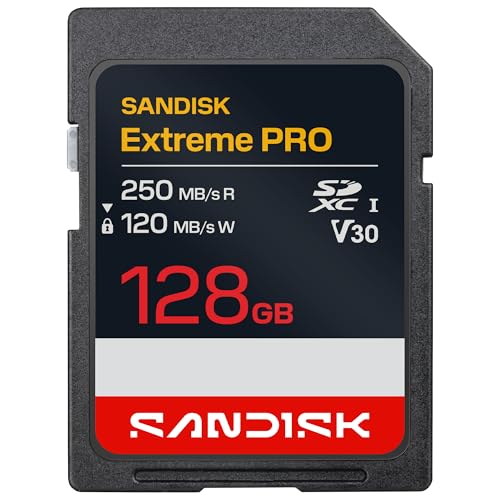
This 128GB SanDisk Extreme PRO SD card is built for cameras, camcorders, and other devices that use full-size SD media. Its U3 and V30 ratings support 4K UHD recording and high-resolution photos on compatible equipment. The card offers read speeds up to 250MB/s, which can shorten file transfers when paired with a compatible card reader and computer.
The 128GB capacity provides useful space for travel photos, long recording sessions, and frequent shooting. SanDisk also designs this line for demanding conditions and repeated handling, though the product details do not list a specific waterproof, dustproof, or drop-resistance rating. The included desktop Memory Zone app can help back up, sort, and transfer files from an SD slot or reader. At around $52, this card costs more than basic 128GB options. One detail matters: the advertised write speed up to 170MB/s applies to 256GB through 1TB versions, not this 128GB model.
Pros
- U3 and V30 ratings support 4K UHD video on compatible cameras.
- Up to 250MB/s read speed can reduce transfer times.
- 128GB holds more photos and video than smaller cards.
Cons
- The 170MB/s write-speed claim does not apply to the 128GB capacity.
- Maximum speeds require compatible cameras, card readers, and host devices.
Buying Guide
Sustained write speed matters most when choosing a memory card for a Leica Q. A card rated V30 or U3 can handle large RAW files and reduce pauses during continuous shooting.
- Speed rating: Choose UHS-I U3 or V30, with a minimum sustained write speed of 30 MB/s. Avoid cards labeled only Class 10.
- Capacity: Pick 64GB for lighter use or 128GB for travel and frequent RAW shooting. A 64GB card holds roughly 1,000 to 1,500 typical RAW files, depending on file size.
- Card type: Use a full-size SDXC card, not a microSD card inside an adapter. SDXC cards from 64GB through 2TB use the camera’s supported format range.
- Brand and warranty: Look for established makers that provide a limited lifetime warranty and clear counterfeit checks. Buy from an authorized retailer rather than an unknown marketplace seller.
- Backup planning: Carry two 64GB cards instead of one 128GB card if losing a full day of photos would be costly. Replace cards showing errors, corrupted files, or unusually slow saves.
If you cannot have everything, prioritize the V30 or U3 sustained-speed rating before capacity or extra warranty coverage.
Frequently Asked Questions
What SD card speed is best for a Leica Q?
A UHS-I SDXC card with a U3 or V30 rating is the right choice for most Leica Q cameras. Choose 64GB or 128GB for a practical balance of capacity, cost, and file storage. Avoid unbranded cards, and buy from an authorized seller to reduce counterfeit risk.
How much storage should a memory card for Leica Q have?
A 64GB card is enough for most day trips, while a 128GB card suits longer travel or frequent RAW shooting. Carrying two 64GB cards can reduce the risk of losing every image if one card fails, and it lets you keep a spare ready.
Can a UHS-II card be used in a Leica Q?
Yes, a UHS-II SD card can be used in compatible Leica Q models, but the camera may operate at UHS-I speeds. The original Leica Q commonly uses UHS-I performance, while newer Q-series bodies may support faster standards, so check the exact model manual before paying extra.
Are V30 SD cards reliable for Leica Q photography?
Yes, a genuine V30 SDXC card from a reputable brand is reliable for Leica Q photography and provides a sustained write rating suitable for still images. V30 means at least 30 MB/s sustained write performance, and 64GB or 128GB capacities cover typical shooting days without excessive card swapping.
Conclusion
The SanDisk Extreme PRO SD Memory Card is the top pick for Leica Q owners who want dependable speed for full-resolution photos, bursts, and video. If your priority is maximum storage for long trips rather than the fastest sustained writing, pick a higher-capacity card from a reputable brand, provided it matches the camera’s requirements and your budget. Before buying, double-check the card size, Leica Q compatibility, quantity needed, and current price, since deals and bundle contents can change. A 64GB or 128GB option may suit short outings, while smaller cards can limit losses if one fails. Choose a capacity that fits your shooting habits, then format the card in the camera.