
5 Best CR123A Battery for Arlo Camera on a Budget
For most buyers, the Arlo 123A Battery Pack with Charger is the top pick and the best cr123a battery for arlo camera because its included charger makes repeat replacements simpler and less costly than buying loose cells. This setup suits Arlo owners who want a ready-to-use rechargeable option instead of a single-use battery that gets discarded after one cycle.
This guide is for Arlo users comparing replacement power for indoor cameras, outdoor units, or backup kits. The key checks are CR123A size and voltage compatibility, followed by rated capacity, since those details affect fit, runtime, and camera reliability. Price, charger quality, and cell count also matter when buying a pack. The five picks below are ranked with clear reasons and honest drawbacks for each, helping you choose a battery set that fits your camera and replacement routine.
Quick Comparison
| # | Product | Best For | Price | |
|---|---|---|---|---|
| 1 | Arlo 123A Battery Pack with Charger | Arlo camera owners | ~$22 | View → |
| 2 | EBL CR123A Lithium Battery | Bulk backup battery buyers | ~$16 | View → |
| 3 | Duracell CR123A Lithium Battery | Reliable flashlight users | ~$44 | View → |
| 4 | Energizer 123 Lithium Batteries | Multi-pack emergency kit builders | ~$8 | View → |
| 5 | Energizer 123 Lithium Batteries | Frequent sensor battery replacers | ~$13 | View → |
5 CR123A Batteries for Arlo Cameras
This list is ranked by camera compatibility, battery life, value, and availability, counting down to the top pick.
5. Energizer 123 Lithium Batteries

Best for: Cameras, flashlights, and smart sensors
The Energizer 123 is a 3V lithium photo battery sold in a six-pack. It fits many cameras, flashlights, security sensors, and other smart home devices that use the 123 battery size. This cell also replaces several common labels, including CR123, CR123A, CR17345, 5018LC, and EL123. Check your device’s manual before ordering, since these names do not fit every battery compartment.
Its main advantage is long storage life. Energizer rates the batteries for up to 10 years in storage, which helps if you keep spares for emergencies or use devices only from time to time. Lithium construction also suits equipment that needs dependable power in a compact format. At around $13 for six, the pack offers a practical supply for several devices or future replacements. These are photo batteries, not a universal option for AA- or AAA-powered products, so size and voltage still matter.
Pros
- Six 3V batteries provide spares for cameras, flashlights, and sensors.
- Up to 10 years of storage life helps reduce replacement waste.
- Replaces CR123, CR123A, CR17345, 5018LC, and EL123 labels.
Cons
- These are single-use batteries, so frequent users cannot recharge them.
- Compatibility is limited to devices designed for the 123-size, 3V format.
4. Energizer 123 Lithium Batteries
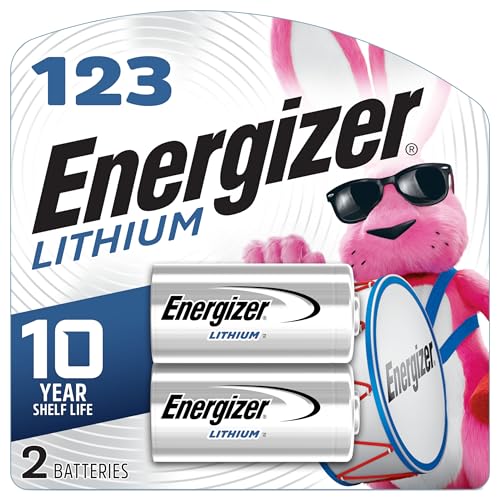
Best for: Cameras and smart home devices
The Energizer 123 is a 3V lithium photo battery sold in a two-pack. It fits many cameras, flashlights, motion sensors, security equipment, and other compact devices that need a CR123-style cell. This battery replaces several common designations, including 5018LC, CR123, CR123A, CR17345, and EL123. At around $8, the pack costs more than many standard alkaline batteries, but it targets devices that require lithium power.
Its main advantage is long storage life. Energizer rates these cells for up to 10 years in storage, so they can sit in an emergency kit or spare-battery drawer for a long time. Lithium construction also suits devices that need dependable power in a small package. Still, the two-pack may not last long if a camera or security system uses multiple batteries at once. Check your device’s battery label before buying, since similar-looking cells can have different specifications.
Pros
- Two 3V lithium batteries provide a spare for compatible devices.
- Up to 10 years of storage life helps reduce replacement waste.
- Replaces CR123, CR123A, CR17345, 5018LC, and EL123 cells.
Cons
- The two-pack may be too small for devices that use several batteries.
- Lithium photo batteries cost more than common alkaline options.
3. Duracell CR123A Lithium Battery

Best for: Outdoor security camera owners
The Duracell CR123A is a 3V lithium battery for devices that need compact, high-output power. This 12-count pack fits tactical flashlights, alarm sensors, professional cameras, and many Ring, Nest Cam, and Arlo security products that specify CR123A batteries. Its lithium chemistry stores more energy than standard alkaline cells in high-drain equipment, which can help demanding devices run reliably.
Storage life is the main attraction here. Duracell guarantees these batteries for 10 years in storage, making the pack useful for emergency kits, camera bags, and backup security supplies. They are also designed to work across a wide temperature range, from sub-freezing conditions to high heat. That suits outdoor cameras and flashlights used in changing weather. At around $44, the pack costs more upfront than many everyday batteries, but the 12-cell quantity gives you several replacements on hand.
Pros
- 12 batteries provide a useful supply for cameras, sensors, and flashlights.
- 3V lithium chemistry suits high-drain devices better than standard alkaline cells.
- A 10-year storage guarantee supports long-term emergency and security backups.
Cons
- These cells only fit devices designed for CR123A batteries, not AA or AAA compartments.
- Around $44 is a sizable upfront cost for a 12-count battery pack.
2. EBL CR123A Lithium Battery

Best for: Arlo camera owners needing spares
The EBL 12-pack contains CR123A lithium batteries for devices that use 3V power. Each cell has a rated 1600mAh capacity and works as a replacement for CR123A, CR17345, DL123A, and several related battery codes. They fit compatible Arlo Pro and Arlo Go cameras, flashlights, security systems, and some detectors. These are single-use batteries, not rechargeable cells.
The pack costs around $16, which keeps the per-battery price low for backup storage. EBL lists a shelf life of up to 10 years when stored correctly, so the extras can remain in an emergency kit or drawer. The stated operating range is -40°F to 158°F, a useful spread for outdoor equipment. Leak-resistant construction, short-circuit protection, and PTC safety technology add protection during use. EBL also claims 3–5 times the runtime of standard alternatives in high-drain devices, but actual results depend on the equipment, settings, and temperature.
Pros
- Twelve batteries provide a practical supply for cameras, lights, or alarms.
- 1600mAh capacity can support longer use in high-drain equipment.
- Up to 10 years of storage life suits emergency and backup kits.
Cons
- The batteries cannot be recharged, so regular users must buy replacements.
- Runtime claims vary by device and conditions, and the pack includes no charger or storage case.
1. Arlo 123A Battery Pack with Charger

Best for: Arlo owners needing spare batteries
This kit includes eight rechargeable 123A batteries and a 2A smart charger. Each cell is rated at 750mAh, giving compatible Arlo wireless cameras a ready supply of replacements. The listed camera support includes the VMC3030, VMK3200, VMS3330, VMS3430, and VMS3530 models. At around $22, the package costs less than buying several small battery packs separately.
The main draw is the quantity. Eight batteries let you keep charged spares available while others power cameras, flashlights, toys, emergency lights, or outdoor solar lights. The manufacturer rates each battery for about 800 recharge cycles and estimates two to three years of frequent use. Those figures depend on charging habits, storage, and the device itself. The 2A charger may also reduce waiting time, but the listing does not provide a full charging timetable. Buyers should confirm their camera model and battery requirements before ordering.
Pros
- Eight rechargeable 123A cells provide several replacement batteries at once.
- 750mAh capacity suits compatible Arlo cameras and other listed devices.
- Claimed 800-cycle rating may reduce repeat battery purchases.
Cons
- Compatibility is limited to devices designed for 123A batteries, so it will not fit every Arlo camera.
- The listing does not state exact camera runtime, voltage details, or charger-port type.
Buying Guide
The most important factor is compatibility with your exact Arlo model. Battery count, voltage, and chemistry vary, so confirm the camera’s manual before choosing a CR123A pack.
- Battery type: Choose 3-volt CR123A lithium primary cells unless your Arlo model specifically supports rechargeable batteries. Do not substitute AA or RCR123 cells.
- Battery count: Check how many cells the camera needs. Some Arlo cameras use four batteries, so a four-pack provides one complete replacement set.
- Capacity: Look for at least 1,400 mAh per cell from a reputable brand. Higher capacity may extend runtime, but Arlo’s recording settings and Wi-Fi activity also affect battery life.
- Physical size: Standard CR123A cells measure about 0.67 inches wide and 1.36 inches long. Avoid products labeled CR2, 16340, or other similar-looking sizes.
- Storage and value: Pick sealed cells with an expiration date several years away. A four-pack commonly costs $8 to $20, while larger 12- or 16-packs can reduce the per-cell price.
If you cannot have everything, prioritize exact model compatibility and the correct 3-volt lithium chemistry over capacity or pack size.
Frequently Asked Questions
How do I choose a CR123A battery for my Arlo camera?
Choose a 3-volt CR123A lithium battery listed as compatible with your specific Arlo model, and avoid judging options by capacity alone. Primary cells usually provide the safest fit because many cameras are not designed for 3.7-volt rechargeable RCR123 cells. Check the camera manual before buying a multipack.
What is the best battery type for an Arlo camera?
The best type is usually a non-rechargeable 3-volt CR123A lithium cell that matches your Arlo camera’s manual. Look for reputable labeling, sealed packaging, and a stated expiration date. Do not substitute a common CR2 or AA battery, since those cells differ in size, voltage, and contact design.
Can I use rechargeable batteries in an Arlo camera?
You can use a rechargeable CR123-format cell only if Arlo specifically approves it for your camera. Many RCR123 batteries output 3.6 or 3.7 volts, not the 3 volts supplied by primary CR123A cells. That voltage difference can cause poor operation or damage, so confirm compatibility in the exact model’s instructions.
Are lithium CR123A batteries safe for Arlo cameras?
Yes, lithium CR123A cells are generally the right battery style for Arlo cameras that specify CR123A batteries, but compatibility depends on the model. A sealed pair from a known brand can be a sensible choice, while stored batteries should remain in a cool, dry place and be replaced before expiration.
Conclusion
The Arlo 123A Battery Pack with Charger is the top pick for Arlo owners who want a bundled replacement option and a charger in the same purchase. If your priority is the lowest upfront cost, choose a compatible battery-only pack instead, since you may already have a suitable charger. Before buying, double-check the CR123A size, your exact Arlo camera’s compatibility, the number of batteries in the package, and the current price. A lower pack price may reflect fewer cells, while a larger bundle may cost more at checkout. Check return terms too, especially when buying from a marketplace seller. The right choice should match your camera, replacement schedule, storage needs, and budget without paying for extras you will not use.