5 Best Gaming Keyboard for Small Hands for FPS Games
The One-Handed Gaming Keyboard is the best gaming keyboard for small hands because its compact layout keeps essential controls within easy reach. This dedicated gaming pad takes up less desk space than a full keyboard, while leaving room for a mouse. Its focused design can also reduce stretches during play, especially in games that rely on frequent movement and shortcut keys.
This guide is for players who find standard keyboards wide, tiring, or awkward to position. The key factors are overall width, spacing between controls, switch feel, wrist support, and connection type. A smaller frame is not enough if the keys feel cramped or the materials flex under pressure. The five picks below are ranked by their practical strengths, with clear reasons and honest drawbacks for each, so you can choose a compact control setup that fits your desk and playing style.
Quick Comparison
| # | Product | Best For | Price | |
|---|---|---|---|---|
| 1 | One-Handed Gaming Keyboard | Compact PC Gaming Setups | ~$18 | View → |
| 2 | Redragon K585 One-Handed Gaming Keypad | Programmable Macro Command Users | ~$33 | View → |
| 3 | MageGee Wireless One-Handed Gaming Keyboard | Wireless Couch Gaming | ~$30 | View → |
| 4 | One-Handed Gaming Keyboard and Mouse Combo | Budget Keyboard And Mouse Shoppers | ~$26 | View → |
| 5 | RedThunder One-Handed Gaming Keyboard | RGB-Focused Desktop Gamers | ~$24 | View → |
5 Gaming Keyboards for Smaller Hands
This ranked list counts down from fifth place to the top pick, focusing on compact layouts, key spacing, and gaming features.
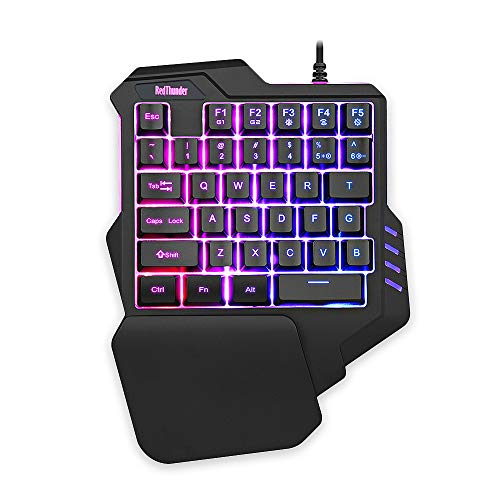
5. RedThunder One-Handed Gaming Keyboard
Best for: PC gamers needing a compact keypad
The RedThunder One Handed Gaming Keyboard is a 35-key keypad for PC gaming. It keeps movement and command keys within reach while taking less desk space than a full keyboard. Each key supports anti-ghosting, which helps register multiple presses during busy game moments. The built-in chip is rated for a 3ms response time. It connects without a separate driver and is listed as compatible with Windows 10, 8, 7, Vista, ME, Mac, Linux, and IBM systems.
Two programmable macro slots add useful flexibility. Pressing FN with F1 or F2 records a sequence, then the same shortcut plays it back. The keypad also includes a large wrist rest, though the product details do not list its dimensions or materials. Its RGB backlight offers seven colors, plus static and breathing modes. Around $24, it costs less than many full gaming keyboards. Still, this is a focused accessory, not a complete typing solution.
Pros
- 35 anti-ghosting keys support simultaneous inputs in most PC games.
- Two macro slots let you save and replay key sequences.
- Seven-color RGB lighting includes static and breathing modes.
Cons
- The 35-key layout cannot replace a full keyboard for chat, browsing, or office work.
- Macro recording requires an FN shortcut sequence, which may take practice to remember.
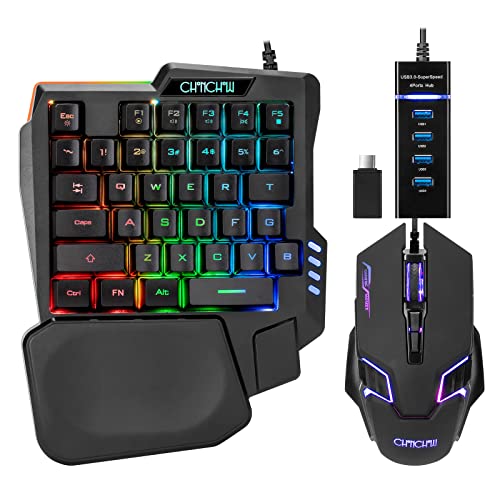
4. One-Handed Gaming Keyboard and Mouse Combo
Best for: Compact PC and console gaming setups
This bundle combines a half-size, one-hand RGB keyboard, an ergonomic mouse, and a four-port USB splitter. The keyboard takes up less desk space than a full model, leaving more room for mouse movement. Its wide wrist rest supports the palm during longer sessions, while two lighting modes, static and breathing, add visible backlight effects. Function keys control volume, mute, music playback, and termination without reaching for separate controls.
The mouse offers four selectable speeds, from 1200 to 7200 DPI, so users can choose slower control or faster cursor movement. The package also includes a USB-A to USB-C adapter, which helps connect the set to compatible newer devices. It supports Windows, macOS, PS4, Xbox One, and Switch without extra drivers, plus a one-year quality warranty. At around $26, this is a low-cost way to add basic controls to several gaming systems.
Pros
- Half-size keyboard saves desk space and leaves more room for mouse movement.
- Four mouse speed levels cover slower aiming and faster cursor control.
- USB splitter and Type-C adapter expand connection options for compatible devices.
Cons
- Game support depends on each title and platform’s keyboard-and-mouse rules.
- iPhone connection requires a separate compatible adapter, and the compact layout may take time to learn.
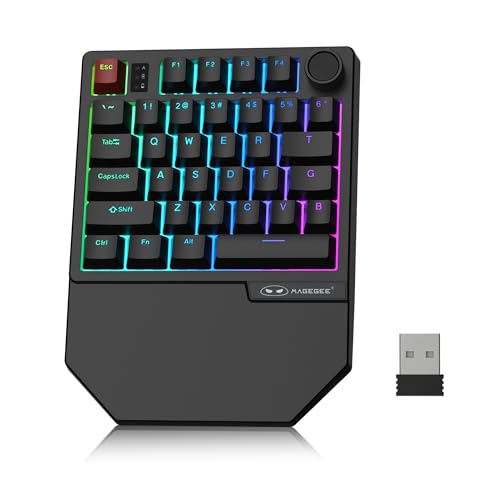
3. MageGee Wireless One-Handed Gaming Keyboard
Best for: Compact gaming setups and shortcuts
The MageGee Wireless One Handed Gaming Keyboard is a compact 34-key pad for gaming, hotkeys, and basic computer control. It uses linear red switches with low resistance and no tactile bump, so key presses feel light and quick. All 34 keys support non-conflict input, which helps when several controls are pressed together. Around $30, it costs less than many full gaming keyboards, but it also covers far fewer functions.
Three connection options give this mini keyboard useful flexibility. You can use Bluetooth, 2.4GHz wireless, or a direct USB connection. The wired mode works without extra drivers on Windows, Mac, Linux, and several older Windows versions. RGB lighting includes static and moving effects, with shortcuts for brightness, color, and lighting changes. A wide palm rest supports the wrist during longer sessions, while the layout includes shortcut keys for one-handed play. The main trade-off is its narrow purpose. It cannot replace a full keyboard for typing, and the product information does not list wireless battery life.
Pros
- 34 non-conflict keys support rapid multi-key commands.
- Bluetooth, 2.4GHz, and USB modes suit different setups.
- Built-in palm rest gives the wrist a larger support area.
Cons
- The 34-key layout lacks the number row, letters, and full navigation controls of a standard keyboard.
- Wireless battery capacity and expected runtime are not specified.
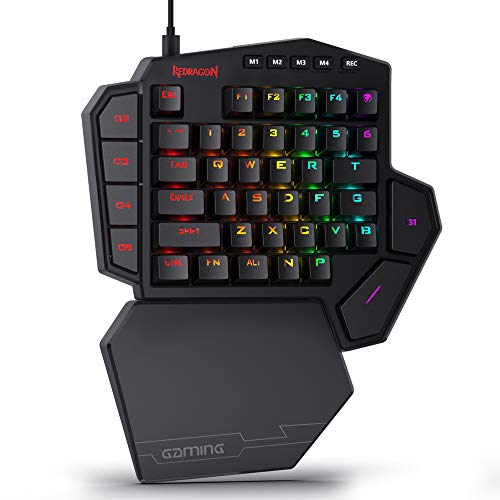
2. Redragon K585 One-Handed Gaming Keypad
Best for: MMO and MOBA players
The Redragon K585 is a wired, one-handed gaming keypad with 42 keys for movement, abilities, and shortcuts. Its compact layout leaves your main keyboard free for chat or other commands. Seven onboard macro keys can store up to 28 commands across four profiles, so one press can trigger a longer ability sequence. Around $33, it offers a lot of control for a specialized accessory.
Its hot-swappable sockets accept most 3-pin and 5-pin switches, with no soldering needed. That lets you change the key feel later instead of replacing the entire keypad. A USB pass-through port can connect a mouse or headset, while the magnetic wrist rest detaches when you need more desk space. RGB lighting supports 16.8 million colors and five modes. The companion software adds recorded macros and custom lighting designs, though setup takes more time than using default controls.
Pros
- Seven macro keys support 28 assignments across four profiles.
- Hot-swappable sockets accept most 3-pin and 5-pin switches.
- USB pass-through and a detachable wrist rest improve desk flexibility.
Cons
- The 42-key layout takes time to learn beside a standard keyboard.
- Wired operation requires a USB connection and offers no wireless option.
1. One-Handed Gaming Keyboard

Best for: FPS players with limited desk space
This compact one-handed keypad measures 8.3 by 6.3 by 1.2 inches. Its 35 keys leave more room for mouse movement, which helps on smaller desks. The USB connection is plug and play, with listed support for PC, Mac, PS3, PS4, PS5, and Xbox. At around $18, it targets players who want extra controls without buying a full gaming keyboard.
The design includes a built-in wrist rest, curved keycaps, a stepped layout, and recessed “crater” keys. These details should make longer sessions more comfortable, though comfort will still depend on your hand size and playing position. Rainbow LED lighting covers the keys and keyboard sides. FN shortcuts control static or breathing modes, lighting off, music playback, volume, mute, and stop. The listing also covers Windows versions from Windows 2000 through Windows 11, plus a 30-day refund or replacement period and 12 months of maintenance for quality issues.
Pros
- The 35-key layout preserves mouse space for FPS games.
- USB plug-and-play support works across several consoles, computers, and Windows versions.
- The wrist rest, curved keycaps, and stepped layout support one-handed use.
Cons
- It cannot replace a full keyboard for writing, office work, or games needing many keys.
- Lighting controls use key combinations, and the listing does not specify detailed color customization.
Buying Guide
Key spacing and overall reach matter most for smaller hands. A compact layout keeps frequently used keys closer, which can reduce finger stretching during long gaming sessions.
- Keyboard size: Choose a 60% or 65% layout, usually 11.5 to 13 inches wide. A 75% model can work if you need arrow keys and function-row access.
- Key spacing: Look for standard 19-millimeter key spacing and a low front height under 1.5 inches. Avoid oversized gaming boards with extra macro columns.
- Switch feel: Linear or light tactile switches rated around 35 to 50 grams can reduce finger fatigue. Hot-swappable sockets let you replace switches later.
- Response features: Seek wired USB-C connectivity, N-key rollover, and a polling rate of at least 1,000Hz. These features suit fast games without relying on wireless battery life.
- Comfort and price: A detachable wrist rest and adjustable feet add useful support. Expect to spend $50 to $120 for a compact gaming keyboard with dependable parts.
If you cannot have everything, prioritize key spacing and a compact width before lighting, wireless support, or extra macro keys.
Frequently Asked Questions
How do I choose a gaming keyboard for small hands?
Choose a compact gaming keyboard with a low front edge, reachable controls, and adjustable actuation. A 60% or 65% layout reduces hand travel, while 65% models keep arrow keys. Look for keycaps with about 19 millimeters between centers and switches requiring 35 to 50 grams of force.
What keyboard size works best for shorter fingers?
A 60% or 65% keyboard usually fits small hands best because it keeps controls within reach. Choose 65% if you use arrow keys often. These layouts typically measure about 12 to 13 inches wide, compared with roughly 17 to 18 inches for full-size models.
Can low-profile switches help with small hands?
Yes, low-profile switches can reduce finger lift and make repeated presses feel easier, but they do not shorten the distance between keys. Check keycap shape and board width first. A 1.5 to 2 millimeter actuation point may suit fast play, while quieter options often feel softer.
Are wireless gaming keyboards good for smaller hands?
Yes, a wireless keyboard can work well when its compact layout and key spacing fit your reach. Check battery life, connection type, and weight before buying. Many 65% boards weigh under 2 pounds and connect through Bluetooth, 2.4GHz wireless, or a detachable USB cable.
Conclusion
The One-Handed Gaming Keyboard is the top pick for players with smaller hands who want a compact control layout, shorter reaches, and a setup focused on gaming rather than full-size typing. If your priority is broader game support or regular writing, choose a compact tenkeyless or 60% gaming board instead, since its familiar key arrangement can offer more flexibility while still saving desk space. Before buying, double-check the keyboard’s overall size and key spacing, confirm compatibility with your computer and preferred games, verify whether the listing includes one keyboard or a multipack, and compare the current price across trusted sellers because discounts and bundle contents can change.